
SUNSCENE / TECHNICAL GUIDES
Planning path and accent lighting as one system
Use different light distributions to guide movement, reveal planting and give outdoor spaces a clear visual hierarchy.
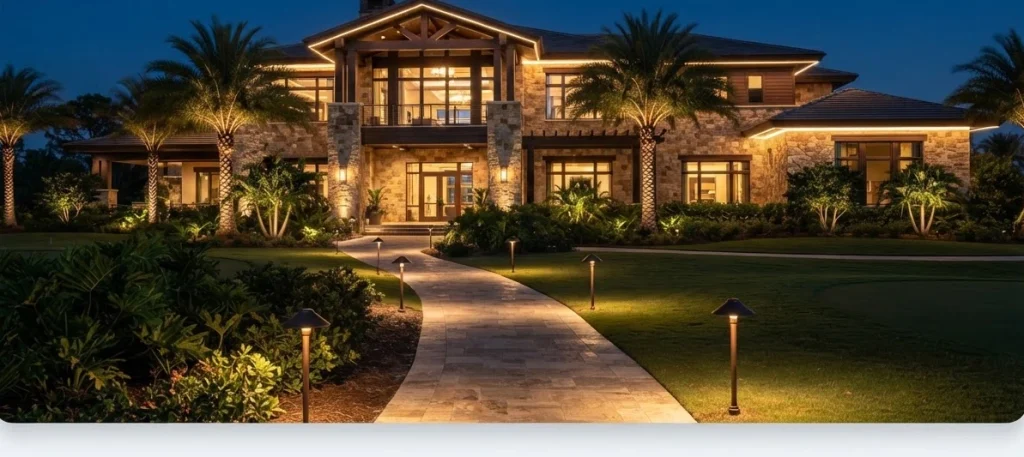
Give each light a purpose
Path lighting and accent lighting perform different jobs. Path fixtures help define a route and its edges. Directional spotlights draw attention to planting, materials or architectural features. A considered scheme uses both without asking one fixture type to do everything.
Think in layers
Start with the areas where people walk, enter and gather. Then identify a small number of landscape or architectural details that deserve emphasis. Leaving some areas quieter can help the important elements read clearly and reduce visual clutter.
For planting, the eventual size and shape of shrubs and trees matter. A fixture that works beside a newly planted border may need adjustment as the planting matures. Keep access for maintenance in mind during layout planning.
Control glare and direction
More output does not always create a more comfortable space. The direction of light, shielding and the viewer’s usual position influence glare. Evaluate where a person will be standing or sitting, and avoid directing exposed light sources toward those viewpoints.
Coordinate color and materials
Color temperature affects the atmosphere of a space. Review the actual product specification, especially when mixing fixture types. Housing finish and material should also be considered alongside paving, architecture and landscape maintenance.
Make the sourcing brief practical
Provide a simple layout, fixture quantities and a description of the intended effect. Include mounting needs, product finishes and target market requirements. Product samples can help teams compare the physical details before a larger order.
Have a specific project in mind?
Share your product list and requirements with our team.